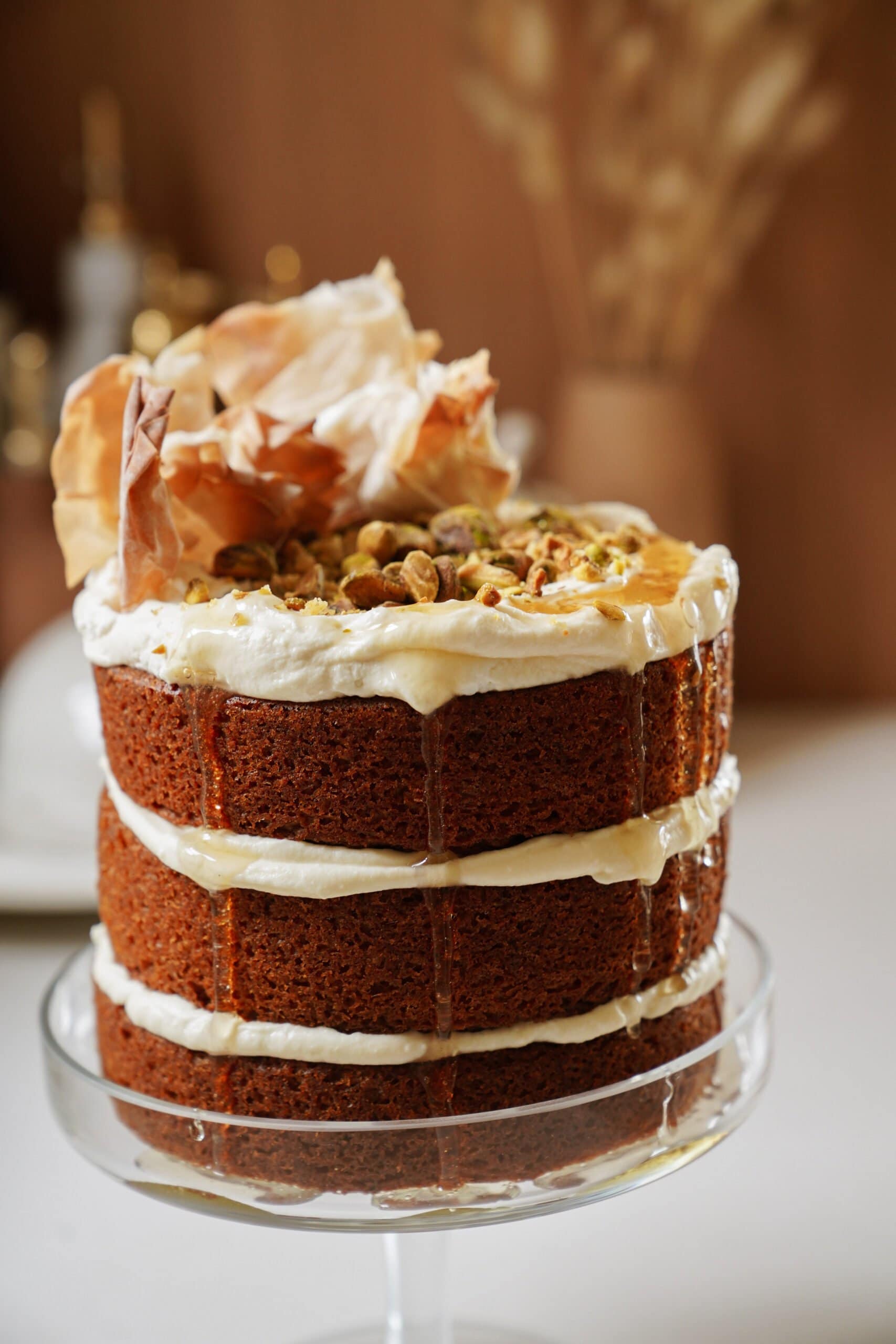
The Irresistible Charm of Baklava Cake: A Culinary Revelation
Imagine the golden, sticky sweetness of traditional baklava, its layers infused with fragrant honey and crunchy nuts, but reimagined in the soft, pillowy embrace of a luscious cake. This isn't just a dream; it's the reality of baklava cake, a modern dessert masterpiece that beautifully marries the iconic flavors of the Mediterranean and Middle East with the comforting familiarity of a classic layer cake. Far from being a mere imitation, baklava cake offers a truly unique experience – a show-stopping dessert that honors centuries of tradition while forging a deliciously new path.
For generations, baklava has held a revered place in celebratory feasts, its intricate phyllo layers, buttered to perfection, encasing finely chopped nuts and drenched in aromatic syrup. It's a dessert that speaks of heritage, skill, and pure indulgence. Yet, the meticulous process of layering dozens of delicate phyllo sheets can be daunting for even seasoned home bakers. This is precisely where the innovation of Baklava Cake: The Modern Twist on a Classic Mediterranean Dessert steps in, offering all the beloved flavors—the intense honey, the satisfying crunch of nuts, the warmth of spices—within the more approachable form of a moist, tender cake.
The Soulful Symphony: Honey, Nuts, and Aromatic Spices
The magic of any baklava, whether traditional or cake-form, lies in a trio of exceptional ingredients:
Honey: The Golden Elixir of Sweetness and Moisture
Honey is more than just a sweetener in baklava cake; it is its very soul. It imbues the cake layers with a distinctive, deep sweetness that sugar alone cannot replicate, contributing immensely to the cake's incredible moisture and tender crumb. When you use liquid honey directly in the cake batter, it not only flavors the dough but also helps to create a soft, airy texture. But the journey of honey doesn't end there; a final generous drizzle over the baked cake is crucial, soaking into every crevice, intensifying the flavor, and ensuring that signature sticky-sweetness that defines baklava. Different varieties of honey—from fragrant orange blossom to rich wildflower—can subtly alter the cake's profile, offering an opportunity for personal flair.
Nuts: The Quintessential Crunch and Earthy Depth
No baklava experience is complete without the satisfying textural contrast and rich flavor of nuts. While many nuts can be used, a combination of pistachios and walnuts is highly favored for baklava cake, creating an authentic and visually stunning result. The walnuts offer a deep, earthy flavor and satisfying crunch, while the vibrant green of finely chopped pistachios provides a beautiful visual counterpoint against the golden cake layers and creamy frosting. These finely chopped nuts are often layered between the cake tiers, much like in traditional baklava, or even gently folded into the batter, ensuring a delightful nutty crunch in every single bite. Toasting the nuts lightly before chopping them can further enhance their aromatic complexity.
Warm Spices: The Aromatic Embrace
Beyond honey and nuts, a careful selection of warm spices elevates baklava cake from merely sweet to truly sublime. Cinnamon is non-negotiable, its comforting warmth weaving through every component. Cloves add a subtle, fragrant counterpoint, while a hint of nutmeg or cardamom can deepen the aromatic profile even further. These spices are often incorporated into the cake batter and sometimes into the nut mixture, releasing their fragrant oils as the cake bakes, filling your kitchen with an intoxicating aroma that promises pure indulgence.
From Ancient Pastry to Contemporary Craving: The Evolution of Baklava
For over 500 years, the traditional phyllo-based baklava has been a culinary icon, with its origins debated across Turkey, Greece, the Arabian Peninsula, and the Levant. Each region has adapted the recipe, lending it a local twist, but the core essence—finely layered pastry, nuts, and syrup—has remained constant. Historically, it was a dessert reserved for special occasions or the tables of royalty due to the labor-intensive preparation involved in stretching and layering the paper-thin phyllo dough.
However, modern home bakers, enchanted by baklava's exquisite flavors but seeking a more accessible route, began to experiment. The result was the baklava cake – a brilliant innovation that delivers all the beloved taste without the fuss of phyllo. This ingenious creation, often featuring a moist sponge or semolina-based batter, soaked in a honey or sugar syrup after baking, has rapidly gained popularity. It has become a staple in many Middle Eastern and Greek households for its comparative ease of preparation and its ability to still feel incredibly festive and indulgent. It's truly a testament to how culinary traditions can evolve and adapt to contemporary lifestyles, offering the best of both worlds. For more on this innovative approach, read Baklava Cake: Get Classic Flavors Without the Phyllo Fuss.
Mastering Your Baklava Cake: Expert Baking Tips
Crafting a truly exceptional baklava cake involves more than just assembling ingredients; it's about understanding the interplay of flavors and textures. Here are some invaluable tips to help you achieve perfection:
- Quality Ingredients are Key: Always opt for high-quality, fresh ingredients. Use good quality honey, fresh nuts (ideally not pre-chopped, which can be stale), and aromatic spices. The subtle differences will shine through in the final product.
- Perfectly Chopped Nuts: Aim for a fine but not powdery chop for your nuts. This ensures they distribute well and provide that essential crunch without being overwhelming. You want texture, not grit.
- The Art of the Syrup: The syrup is crucial. It typically consists of honey, sugar, water, and often lemon juice or orange blossom water. Ensure the cake is completely cooled before pouring warm syrup over it (or vice versa, a warm cake with cool syrup). This temperature difference helps the cake absorb the syrup more efficiently, making it incredibly moist and flavorful without becoming soggy. Don't be shy with the syrup; a good baklava cake should be drenched!
- Don't Overmix the Batter: For a tender cake, mix your wet and dry ingredients just until combined. Overmixing develops the gluten too much, leading to a tough cake.
- Layering for Impact: For a truly authentic baklava cake experience, consider layering a portion of your spiced nut mixture between each cake layer, along with a creamy frosting. This mimics the traditional baklava structure beautifully.
- Choosing Your Frosting: While some versions skip frosting, a complementary one can elevate the cake. A light cream cheese frosting, a mascarpone cream, or even a simple whipped cream can cut through the sweetness of the syrup and add a luxurious, creamy element.
- Aesthetic Appeal: Baklava cake is a showstopper. Don't forget the final touches! A generous sprinkle of reserved chopped pistachios on top, a final drizzle of honey, or a dusting of cinnamon will make it visually irresistible.
Conclusion: A New Tradition in the Making
The baklava cake stands as a testament to culinary evolution, proving that cherished flavors can transcend traditional forms. It offers a glorious blend of rich honey, crunchy nuts, and aromatic spices, all enveloped in a tender, moist cake that promises a delightful experience with every forkful. Whether you're an experienced baker looking for a new challenge or a passionate home cook eager to bring a taste of the Mediterranean to your table without the fuss of phyllo, mastering baklava cake is a rewarding endeavor. It's more than just a dessert; it's a celebration of flavor, tradition, and innovation, ready to become the centerpiece of your next special occasion or simply a perfect indulgence for any day of the week.
