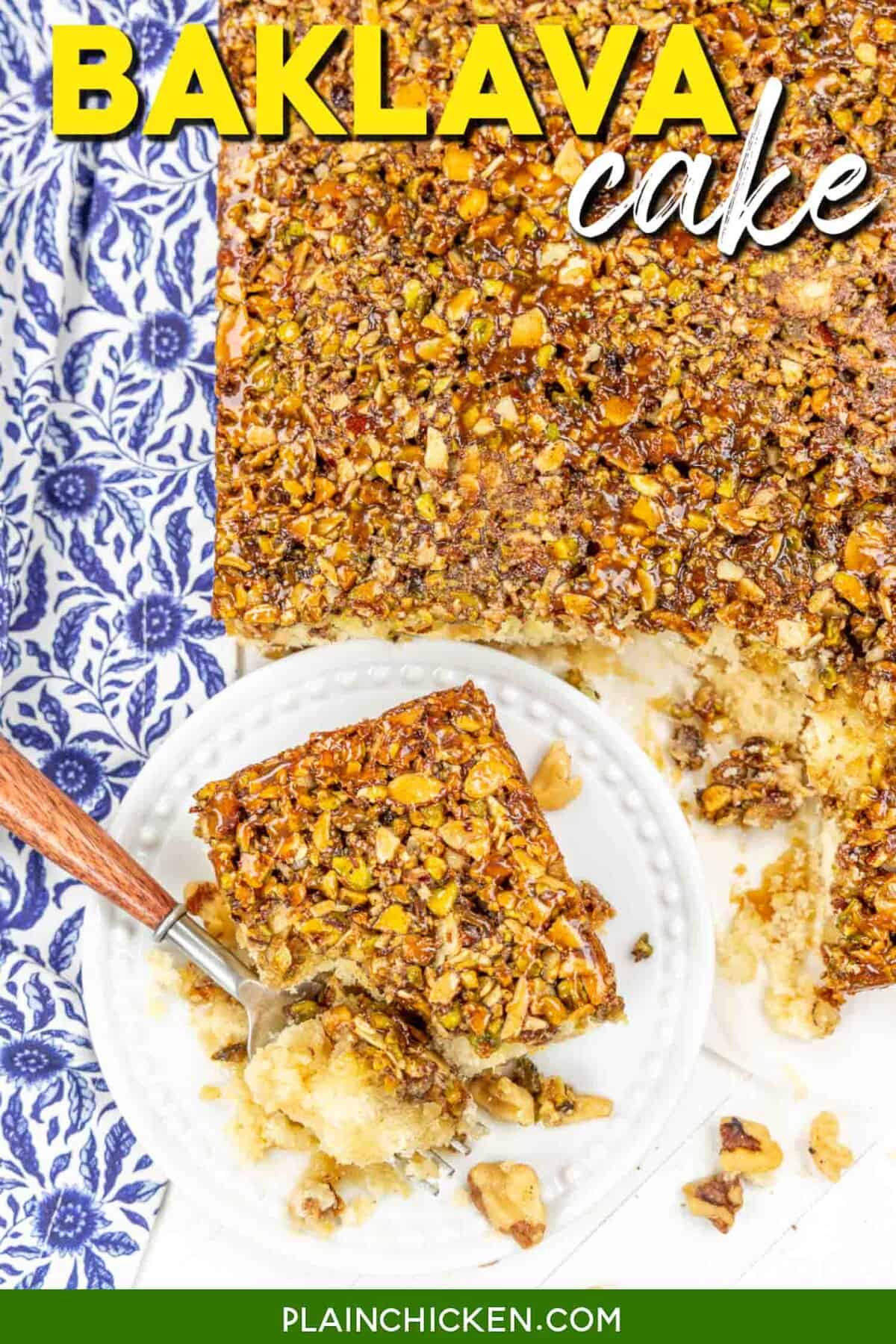
Baklava Cake: Get Classic Flavors Without the Phyllo Fuss
Imagine the rich, aromatic embrace of honey, the satisfying crunch of nuts, and the warmth of exotic spices – all the beloved hallmarks of traditional baklava. Now, picture all of that encapsulated in a moist, tender, and effortlessly elegant cake. Welcome to the world of baklava cake, a culinary revelation that captures the essence of this timeless Mediterranean dessert without the intricate, time-consuming process of layering delicate phyllo dough. This innovative creation is more than just a dessert; it’s a celebration of flavor, a tribute to tradition, and a testament to modern baking ingenuity, perfect for those who crave a show-stopping treat with less kitchen fuss.
The baklava cake has emerged as a beloved alternative, offering a lighter, softer, and more adaptable dessert experience. It transforms the iconic nutty, sugary, and syrup-drenched profile of baklava into a moist sponge or semolina-based cake. Gone are the endless sheets of butter-brushed phyllo; in their place are honey-infused layers, a creamy, luscious frosting, and a generous scattering of crunchy nuts and aromatic spices. This reimagined classic is not only easier to prepare but also brings a sophisticated touch to any special occasion, making it a favorite for home bakers and dessert enthusiasts alike.
The Allure of Baklava Cake: Classic Flavors, Modern Convenience
For centuries, traditional baklava has reigned supreme as a celebratory dessert across the Middle East and Mediterranean, revered for its flaky texture and intensely sweet, sticky syrup. However, its preparation, involving numerous paper-thin phyllo layers, often makes it a labor of love reserved for grand feasts. This is precisely where the baklava cake steps in, offering a brilliant solution for those who adore baklava's distinctive taste but seek a more approachable, less demanding baking project.
The beauty of baklava cake lies in its ability to deliver an authentic flavor experience in a completely new format. Instead of the delicate crunch of phyllo, you get a wonderfully moist and airy cake crumb, infused with the very same honey and spice notes. This makes it a far more versatile dessert, suitable not just for special events but also for casual gatherings, afternoon tea, or simply satisfying a sweet craving. It’s a modern kitchen invention born from the desire of home bakers to recreate that iconic taste without the traditional fuss. The cake base provides a delightful contrast to the rich fillings and syrup, resulting in a dessert that feels both indulgent and surprisingly light.
Moreover, the baklava cake offers immense creative freedom. While traditional baklava is fairly rigid in its structure, the cake allows for variations in frosting, decoration, and even the type of cake base (sponge or semolina). This adaptability ensures that each baklava cake can be a unique masterpiece, reflecting the baker's personal touch while still paying homage to its ancient roots. It’s truly a testament to how culinary traditions can evolve and adapt to contemporary lifestyles without losing their soul.
Unpacking the Essentials: What Makes a Baklava Cake Sing?
Crafting an unforgettable baklava cake hinges on understanding and expertly combining its core components. Each element plays a crucial role in replicating the magic of traditional baklava within a cake format. From the foundational sweetness to the signature crunch and the aromatic complexity, every ingredient contributes to the final masterpiece.
The Golden Nectar: Honey's Central Role
Honey is undeniably the heart and soul of any baklava-inspired dessert. In a baklava cake, it’s responsible for much more than just sweetness. Liquid honey is incorporated directly into the cake batter, lending a distinctive, deep flavor and contributing significantly to the cake's incredible moisture. Post-baking, a warm honey-based syrup is often drizzled or poured over the cake, allowing it to soak in and intensify the flavor, mimicking the syrup-drenched nature of traditional baklava. A final, glistening drizzle of honey before serving adds both visual appeal and an extra layer of sweetness. Experimenting with different types of honey – from floral orange blossom to robust wildflower or even delicate acacia – can subtly alter the cake's flavor profile, adding another dimension to this already complex dessert.
The Nutty Crunch: Pistachios and Walnuts
No baklava, traditional or cake, is complete without its signature nutty texture and flavor. The most authentic baklava cake recipes typically feature a combination of finely chopped pistachios and walnuts. Walnuts provide a classic, earthy base, while pistachios add a vibrant green hue and a distinct, slightly sweeter flavor. These nuts are often layered between cake tiers, mixed into the batter, or generously sprinkled on top as a garnish, providing that essential crunch and nutty aroma. For an enhanced flavor, lightly toasting the nuts before chopping can bring out their oils and deepen their taste. While pistachios and walnuts are traditional, home bakers can also experiment with other nuts like almonds or pecans for a unique twist.
Understanding the interplay of these elements is key to creating a truly authentic experience. Learn more about crafting the perfect layers and nutty crunch in our guide: Mastering Baklava Cake: Honey-Infused Layers & Nutty Crunch.
Aromatic Embrace: The Warm Spices
The enchanting aroma of baklava often comes from a careful blend of warm spices. Cinnamon is almost always present, offering a sweet, woody note that beautifully complements the honey and nuts. Cloves add a subtle, pungent warmth, enhancing the overall complexity. Some recipes might also include hints of cardamom or nutmeg, further enriching the spice profile. These spices are typically mixed into the cake batter and the nut filling, ensuring that every bite is imbued with their comforting fragrance. The balance of these spices is crucial; they should enhance, not overpower, the natural flavors of honey and nuts.
The Foundation: Moist Cake Layers (No Phyllo Needed!)
The structural heart of the baklava cake is its moist, tender cake layers. Unlike the laborious phyllo, these layers are typically made from a sponge or semolina-based batter. This foundation provides a soft, airy texture that readily absorbs the honey syrup, ensuring the cake remains incredibly moist and flavorful. The cake's ability to hold its shape while remaining soft is key to its appeal, offering a pleasant contrast to the crunchy nuts and creamy frosting.
The Creamy Crown: Frosting that Completes the Masterpiece
While traditional baklava doesn't feature frosting, the baklava cake often does, adding a luxurious dimension. A creamy frosting, such as a mascarpone-based cream cheese frosting or a smooth buttercream, serves as the perfect counterpoint to the rich, sweet cake layers and crunchy nuts. It adds a delightful tang and silkiness, making the cake feel even more decadent and providing a beautiful canvas for decoration. The frosting helps to bind the layers, creating a cohesive and visually stunning dessert.
A Journey Through Time: The Origins and Evolution of Baklava
The story of baklava is as rich and complex as its flavor profile, shrouded in centuries of culinary history and spirited debates over its true origins. Regions spanning Turkey, Greece, Persia, the Levant, and the Arabian Peninsula all lay claim to inventing this iconic pastry. While pinpointing its exact birthplace remains elusive, it's undeniable that baklava has been a cherished dessert for over 500 years, migrating across the Balkan, Mediterranean, and Middle Eastern regions, with each culture adding its own unique twist to the basic concept of layered pastry, nuts, and syrup.
Historically, due to the painstaking effort involved in its preparation, baklava was considered a luxury item, reserved for grand celebrations, religious holidays, and the tables of royalty. It was a dessert that symbolized prosperity and celebration, often reflecting the status of the host by the sheer number of phyllo layers (some reaching over 40!). The labor-intensive process meant it wasn't an everyday treat, but rather a grand culinary statement.
Fast forward to the modern era, and the advent of the baklava cake marks a significant evolution in this dessert's journey. This innovative form emerged from the kitchens of home bakers who yearned for the authentic flavors of baklava without dedicating an entire day to its creation. It represents a beautiful fusion of tradition and convenience, making a revered dessert more accessible for contemporary households. This modern take retains the soulful essence of baklava – the honey, the nuts, the warm spices – while simplifying the execution. It’s no surprise that baklava cake has rapidly become one of the hottest desserts in many Middle Eastern and Greek homes, offering a taste of tradition with a modern, fuss-free twist.
For a deeper dive into how this iconic dessert has been re-imagined for the modern palate, read our article: Baklava Cake: The Modern Twist on a Classic Mediterranean Dessert.
Baklava Cake in Your Kitchen: Tips for Success
While baklava cake offers a less intimidating path to classic flavors, a few expert tips can elevate your baking experience and ensure a truly spectacular result.
- Quality Ingredients are Key: Just as with traditional baklava, the quality of your ingredients profoundly impacts the final taste. Use high-quality, fragrant liquid honey, fresh nuts (ideally raw for optimal toasting), and vibrant, potent spices. A good quality semolina or all-purpose flour will also make a difference to the cake's texture.
- Perfecting the Nut Mixture: Finely chop your nuts for an even distribution of crunch and flavor. For an extra layer of depth, lightly toast your walnuts and pistachios in a dry pan or oven before chopping and incorporating them into the cake or filling. This enhances their natural oils and intensifies their nutty aroma.
- The Art of Syrup Application: The honey syrup is crucial for moisture and flavor. Pour the warm syrup over a slightly cooled cake. If the cake is too hot, it might become soggy; if it's too cold, it won't absorb the syrup effectively. Allow the cake ample time to fully absorb the syrup – patience here pays off.
- Don't Rush the Frosting: Ensure your cake layers are completely cooled before applying any frosting. This prevents the frosting from melting and sliding off, ensuring a clean and stable finish. For the best creamy frosting, make sure your cream cheese and butter are at proper room temperature.
- Layering for Impact: When assembling, don't be shy with your nut layers. A generous spread between each cake tier creates that satisfying contrast and ensures every slice is packed with flavor and texture.
- Presentation Matters: A baklava cake is inherently beautiful. Garnish generously with more chopped pistachios (their green color pops beautifully), a final drizzle of honey, or even a few carefully placed whole nuts. A light dusting of ground cinnamon can also add an inviting touch.
- Storage Savvy: Store your finished baklava cake in an airtight container at room temperature for a few days, or in the refrigerator for longer freshness. It often tastes even better the next day as the flavors meld and deepen. Bring it to room temperature before serving for the best texture and taste experience.
Conclusion
The baklava cake stands as a testament to culinary evolution, brilliantly merging the timeless allure of a beloved Mediterranean dessert with the convenience and versatility of a modern cake. It offers all the rich, honey-infused, nutty, and spiced flavors that have captivated palates for centuries, but in a format that's accessible and enjoyable for every home baker. Far from merely a simplified version, this cake is a unique creation that provides a softer texture, a creamy dimension, and an effortless elegance that makes it truly shine. So, the next time you crave the exquisite taste of baklava without the traditional phyllo fuss, embrace this magnificent glow-up. Bake a baklava cake, and delight in a dessert that honors tradition while paving the way for wonderfully new culinary experiences.
